BLOG
The OpenSourceMalware Show #30
React2STEAL turns victims' GitHub Actions into attack infrastructure, trojanized agent-framework passes Microsoft's own malware scan
By cb482791-4ef1-4762-96ad-b0ca4bdd538e ·
The OpenSourceMalware Show is available on YouTube, LinkedIn, and as a podcast.
React2STEAL turns victims' GitHub Actions into attack infrastructure, trojanized agent-framework passes Microsoft's own malware scan
This week we talked about:
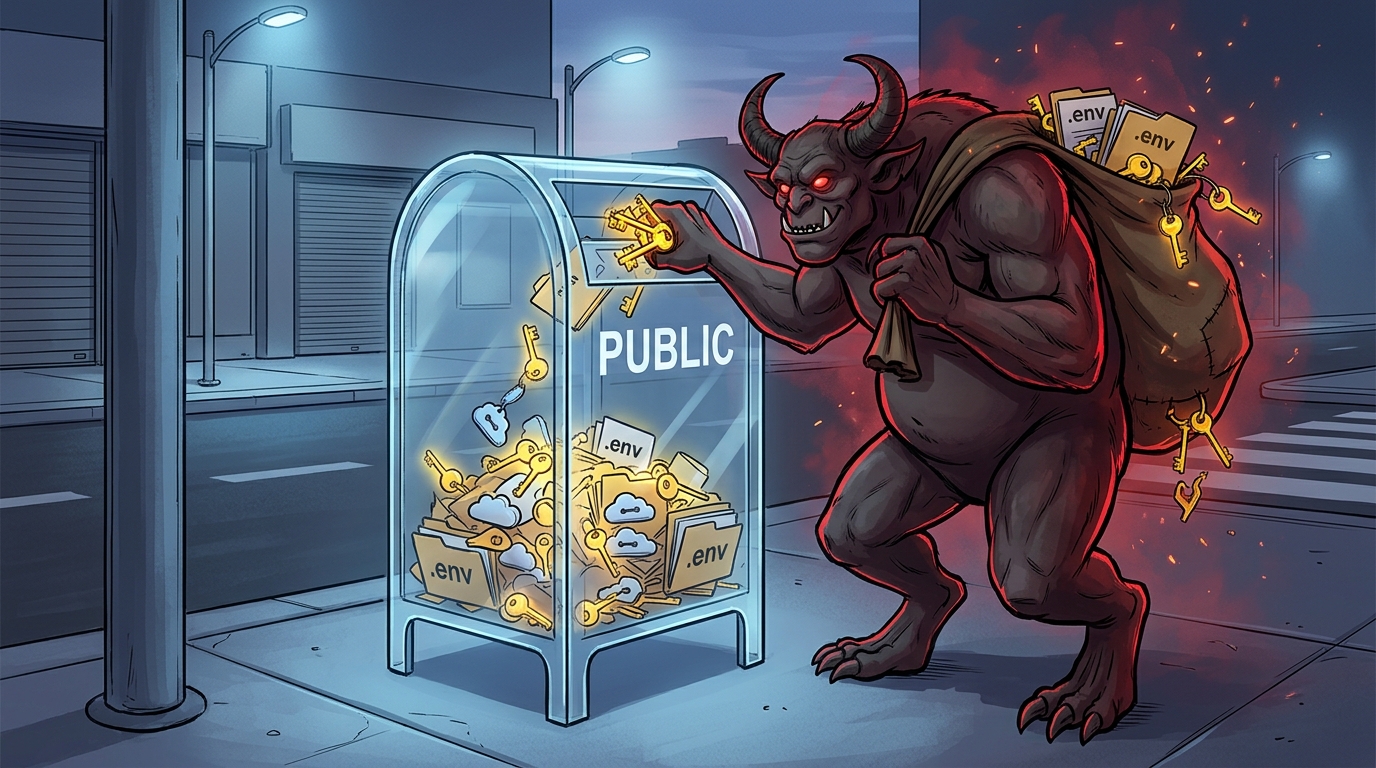
React2STEAL: An automated hacking framework runs entirely on GitHub Actions inside 45 compromised GitHub repositories. It scans for React2Shell and commits stolen credentials back to those public repos. The repo owners aren't the targets. Their accounts are being used as attacker infrastructure, and one target list alone held 18 million host names. We walk through how the pipeline works, why its overlap with wfx-loot, PolinRider, and GhostAction likely points to a shared pool of compromised accounts, and the signs that an LLM wrote the code. We also get into the disclosure dilemma: GitHub only lets you report a repo's owner, not the repo itself, and reporting gets the whole account banned.
Microsoft agent-framework compromise: Two trojanized releases of Microsoft's official agent-framework package on PyPI went through Microsoft's release pipeline and malware scan and came out clean. Anyone who installed or built with versions 1.26.1 or 1.26.2 should audit their Azure and CI/CD access. The .pth infostealer targeted Azure managed identities, GitHub Actions OIDC tokens, and local cloud credentials. We break down research suggesting the attacker got into Microsoft's internal ESRP release system, and why sending stolen data to webhook[.]site made this a near miss.
Resources
(blog) React2STEAL Uses GitHub Actions to Exploit React2Shell
(blog) Official Microsoft agent-framework PyPI package compromised
(X) Rami's research on the agent-framework compromise timeline
[00:00:00] Jenn Gile: Hello. It is Wednesday, November 18th, or Thursday, November 19th if you happen to be on the other side of the International Date Line. Uh, my name is Jenn Gile. I have Paul McCarty with me. We're the co-founders and co-hosts of this show. Um, and we have quite a roundup of things to talk about today. Uh, it's only, like, Wednesday afternoon here in, uh, the Pacific Northwest, and it's like, I feel like it's been a week.
[00:00:30] Jenn Gile: You know those, those pictures of, like, tired pa- cats and stuff? Like, that's, that's who I am right now. How are you doing, Paul?
[00:00:38] Paul McCarty: Yeah, kinda same. You know, I think you and I are typically, like, you know, moving from one attack to another. I think the problem lately has been that we have so many attacks happening that you're, you're kind of working on multiple things at once, which is always difficult.
[00:00:53] Paul McCarty: Um-
[00:00:54] Jenn Gile: Yeah ...
[00:00:54] Paul McCarty: but, you know, it's, it is what it is.
[00:00:58] Jenn Gile: It is the life. Uh, I have made a commitment
[00:01:03] Paul McCarty: now- The life we've chosen ...
[00:01:03] Jenn Gile: uh, 'cause you and I are developing a reputation of, "Oh, great, when Paul and Jenn join the chat..." Sorry, I've got a cat back here who's being quite the pest. All right. You know, when Paul and Jenn join the chat, bad news is gonna be shared, so, uh, it's my commitment- Right
[00:01:20] Jenn Gile: now in our communities that, uh, you also get a cat picture if I'm gonna give you bad news. So now I need to make sure I'm routinely taking pictures of the cat. He's a pretty cute little thing though, so. Nice. Okay, so the other- I just wanna
[00:01:33] Paul McCarty: give a-
[00:01:33] Jenn Gile: Oh,
[00:01:34] Paul McCarty: go ahead. Oh, sorry. I w- I went just YOLO this. I just wanted to give a shout-out.
[00:01:37] Paul McCarty: Uh, this is my first... I'm down in Sydney today, well, yesterday and today. Um, and, uh, here for RooCon, which is put on by Google, which has been an amazing, um, CTI and, and incident response type conference. But I got the shirt on. You can't see it, but anyhow, I got the shirt on. Just wanna give a shout-out to, to them.
[00:01:58] Paul McCarty: I'm, I'm, I'm really enjoying this one.
[00:02:01] Jenn Gile: Awesome. Yeah, I definitely have FOMO for more than one reason. Like, being in Australia sounds great. Going to RooCon sounds great.
[00:02:10] Paul McCarty: It's pretty good.
[00:02:12] Jenn Gile: Okay. I was gonna
[00:02:13] Paul McCarty: say.
React2STEAL turns victims' GitHub Actions into attack infrastructure
[00:02:13] Jenn Gile: We've got three topics. We're gonna try to stick to them today. The first is React2STEAL, uh, a campaign that we just discovered in the last 24 hours.
[00:02:24] Jenn Gile: The second that we'll get into is, um, Trojanized releases of Microsoft's official agent framework on PyPI, uh, came out this week, so we're gonna talk about that. And then a little, uh, research project that I started my week out with. But let's start with React2STEAL. So kind of rewinding, I got a DM yesterday on LinkedIn from, um, a CTI lead.
[00:02:54] Jenn Gile: Uh, her name's Karina Reaño, and she had found a set of GitHub repositories that were scanning for apps vulnerable to a couple of CVEs related to React, specifically React2Shell being one of the CVEs, as well as, um- Uh, Node.js. And she looked at them and she said, "I think there's something here, but I'm not a GitHub expert.
[00:03:22] Jenn Gile: Hey, can you take a look at it, validate that I'm seeing what I'm seeing? Let me know what else you find." Um, the short version is, yeah, we were able to completely validate what she found and also build on it. And it turns out that what she saw some signs for was actually a very sophisticated end-to-end automaking, automated hacking framework that the attacker built using GitHub actions.
[00:03:52] Jenn Gile: Basically, they feed domains into it. They get domain lists, and out the other side, credentials come out, and there's very little that they need to do. So we named it React2STEAL on a little play of React2Shell, since that's the main flaw that it exploits in order to find their credentials. Um, you know, validated again, everything that Karina found, as well as, uh, expanding the data set.
[00:04:19] Jenn Gile: So in total, we found forty-five repositories that are, um, undoubtedly victims themselves of stolen credentials that are being used as, like, public, both dumps as well as to run the attack. Forty-five doesn't sound like a lot, but in a single repo, uh, one of the target lists alone held eighteen million unique host names.
[00:04:45] Jenn Gile: So I think one of the takeaways for me was just the sheer scale that this automated hacking campaign, um, came up with, with a relatively small number of stolen GitHub repositories. And I'm saying stolen because I think that's what happened. I don't think the, the host, um, organizations or owners are involved in this.
[00:05:08] Jenn Gile: Um, it steals, uh, all kinds of credentials, Stripe keys. It looks for a whole bunch of AI, uh, provider keys, no surprise there. Um, steals full config files, AWS credentials. Um, the timeline goes back to about mid-September of when they started running their pipeline, but the repos themselves, um, were created sometime between October s- uh, 22nd, and I think it was November 14th And a weird overlap that, Paul, you and I should definitely talk about here, is on some, not all, or I guess I should say many, not all, of the, um, repositories, there was also a wfx-loot branch.
[00:05:55] Jenn Gile: And as far as I could tell, and I think you agree, this was coincidental. This is not evidence that the same... It doesn't shift us either direction that the same threat actor is running, um, React2STEAL as wfx-loot. Uh, it reads a little bit more like A whole bunch of threat actors right now maybe have their hands on a whole bunch of leaked, you know, credentials in some ways.
[00:06:25] Jenn Gile: You and I were talking the other day, you suggested maybe there's like a leaky OAuth, uh, app out there somewhere that's letting a ton of people get compromised. In one of the repos that I found, um, they had also been previously compromised by both, uh, PolinRider and GhostAction, which we already have documented are separate campaigns.
[00:06:48] Jenn Gile: So I think that kind of does push this toward probably separate actors, and this is just a shared pool of compromised accounts. So, uh, there's so much to talk about here. We haven't even talked about how the malware works, um, but I'll pause there.
[00:07:04] Paul McCarty: Yeah. I think that last point you were talking about is really important to kind of double-click on here, which is just like attribution and the overlap.
[00:07:11] Paul McCarty: I think that on one hand, we know that there's just this constant supply of credentials. In fact, this attack itself is creating more stolen credentials, right? Um, you know, and TeamPCP famously- Yeah, we found
[00:07:25] Jenn Gile: more than 1,000 that were stolen and leaked in these repos.
[00:07:30] Paul McCarty: TeamPCP s- you know, famously had something like seven gigabytes worth of credentials.
[00:07:34] Paul McCarty: Um, so, uh, you know, I think that w- what I'm trying to get at here, Jenn, is that there might be just some totally, you know, unrelated overlap. For example, DPRK, PolinRider, and GhostAction, and the, um, WKLoot,
[00:07:53] Jenn Gile: you know- WFX.
[00:07:54] Paul McCarty: Thank you, Jesus. I can't keep them all straight. Um, probably not related. None of those three are probably related to each other, even though all three of them are touching some of these same repositories.
[00:08:05] Paul McCarty: Um,
[00:08:06] Jenn Gile: but- Yeah,
[00:08:07] Paul McCarty: it's
[00:08:07] Jenn Gile: nuts ...
[00:08:08] Paul McCarty: but that is separate from this other thing that you and y- you and I probably need to spend some more time thinking about and talking about, which is, is there a relationship between wfx-loot and this React2STEAL? And there's more evidence that might be the case. Now, just in the last like 10 minutes before the...
[00:08:26] Paul McCarty: We jumped on here, I was taking a look, and I've, I've got some interesting little tidbits here, um-
[00:08:31] Jenn Gile: Yeah, lay it on me. I haven't
[00:08:32] Paul McCarty: heard ... about... Well, well, the first thing is that the comments are in Arabic for... So basically in the Loot, the JSON Loot- Mm-hmm ... the comments are in Arabic. Um, and obviously, that would point to somebody that's natively, um, speaking Arabic in that part of the world, although that's not necessarily a, you know, a done deal.
[00:08:53] Paul McCarty: But there's not any evidence that the, um, uh, I wanna get it right, wfx-loot Uh, threat actor ever used, um, Arabic in their, their payloads or any of their, their arti- artifacts doesn't preclude it, but because we didn't see it there, but we see it here, you know, that makes me think maybe they're not the same actor, even though there is a significant amount of overlap here, which I, I, I mean, I have
[00:09:21] Paul McCarty: I don't know the numbers. What, what do you think is the overlap between WFX and React2STEAL?
[00:09:23] Jenn Gile: Uh, you know, I didn't put a percentage on it, but it was something like maybe two-thirds of the repos that I looked at-
[00:09:32] Paul McCarty: Whoa ...
[00:09:33] Jenn Gile: had overlap. Um,
[00:09:36] Paul McCarty: but- I mean, let's just stop and, like, think about that. No,
[00:09:38] Jenn Gile: it's, it's significant.
[00:09:39] Jenn Gile: That's a significant number.
[00:09:40] Paul McCarty: Yeah.
[00:09:40] Jenn Gile: And, uh, candidly It was one of those, you know, at first glance, okay, was one feeding the other kind of question. And then when I looked at it, looked at the timeline, it seems separate. Um, WFX ran from November 10th to 12th. Got a needy cat here. He's been fed, I swear. Uh, it ran 10th to 12th.
[00:10:14] Jenn Gile: Um, React2STEAL, still running to be clear, started somewhere back around mid-September. Um, I dated back, uh, some validation inside the code rather than the repos where it was, um, talking about Perplexity tokens and being validated on a specific date, which is an interesting thing to commit to your public repos Uh, side note, we should talk about the role of AI.
[00:10:44] Jenn Gile: Um-
[00:10:45] Paul McCarty: Mm-hmm.
[00:10:46] Jenn Gile: But yeah, that dates back to mid-September, and then the actual repo creation came in three waves. Let me double-check my dates on that, 'cause I don't wanna say the wrong thing. But they were- Okay ... kind of lumpy. Like, it wasn't really clear why. Let's see here. The first wave was October 22nd.
[00:11:04] Paul McCarty: 22nd, yeah.
[00:11:05] Jenn Gile: And in less than 10 minutes they shipped 26 repos. It could be more. Some of the ones that we found were unpublished by the time we got to look at them, so we couldn't date everything. Um- Yeah ... and then on November 11th, so pretty decent gap, they published eight repositories within a minute, 26 seconds apart, uh, the day after wfx-loot began.
[00:11:35] Jenn Gile: And then on November 14th, so what, four days ago, they published another five about 90 seconds apart. Those are staged only, so no results, no wfx-loot probes. I did also in five of the repos find a totally unrelated, um, workflow that I couldn't trace to anything.
[00:12:03] Paul McCarty: Interesting.
[00:12:03] Jenn Gile: Yeah. It's, it's- Hm ... one of those crazy campaigns where you think you got to the heart of it, and then you're like, "What is this?
[00:12:12] Jenn Gile: Where did this come from?" Right. "What are you doing?"
[00:12:14] Paul McCarty: And then there's a whole pivot into something that's bigger, right? Yeah,
[00:12:16] Jenn Gile: and then there's a whole
[00:12:17] Paul McCarty: other pivot. Maybe not, maybe not bigger in this case, but, um, uh, a couple things I was gonna say. I think, um, uh, sh... Uh, so in terms of the... In my experience, when you're doing these kind of big, um, like, these big waves, right?
[00:12:38] Paul McCarty: So basically the first one was, the first one that you and I know about was in October, October 22nd, although it started back in September.
[00:12:46] Jenn Gile: Yeah, I mean, it could- You know,
[00:12:46] Paul McCarty: they collect a lot
[00:12:47] Jenn Gile: of- ... theory. It could have started earlier and they just shut down the repos. We don't know.
[00:12:52] Paul McCarty: Correct. Um, yeah, the... and you know, the, the 40-some that we're looking at might be just a small number of, you know, what are still there, that maybe the, the victims realized- Shut 'em down
[00:13:03] Paul McCarty: and shut down the paths- Yeah ... or whatever it was. Who knows? But, um, the point I was gonna make, though, is that, um... Oh, what was I gonna say? The, um... It's important. Um, it's right there. The... Oh, you just collect all this data, and there's just all this text, and it's unstructured. A lot of it's supposed to be JSON, but they've...
[00:13:27] Paul McCarty: it's not proper JSON, and so they won't be able to parse it well. They'll have to create special tools to go through each one of these files, you know- Process it into proper JSON so they can then extract using jq and doing all the other things. And there's a lot of duplication. They're doing, they're writing...
[00:13:43] Paul McCarty: You know, th- so obviously this is just like a throw stuff at the wall kind of thing, and there's a lot of deduplication they'll have to go through. So it's not surprising that we're seeing these big waves and then a big period of inac- inactivity. We've seen, we saw, even saw this with TeamPCP- Yeah ... and others, when they just collect all this stuff.
[00:14:00] Paul McCarty: They have to just then sit there and, like, it's not really counting your loot, it's more like processing your loot. Figuring
[00:14:05] Jenn Gile: out what your loot has.
[00:14:07] Paul McCarty: Yeah. Figuring out what, you know, 10% is actually something you can attack somebody with, and the other 90% you can just throw away, right? Um, so I think there's a lot of that.
[00:14:17] Paul McCarty: Um, and I did notice that there's a difference in the payload. So the, the Python, the actual fast... What is it? Fast, not Fast Recon. Fast
[00:14:25] Jenn Gile: API, something like that. Yeah. Yeah.
[00:14:27] Paul McCarty: That changed in the last wave, and they added some additional kind of exfil and some other kind of components too as well. So, um, you know, this threat actor is evolving, um, and which we see all the time now.
[00:14:39] Paul McCarty: You know, you were talking about this in one of your other posts about the fact that you're, we, we're seeing threat actors, especially these vibe coding threat actors, evolving and iterating in public. Which is great for us because it gives us great, you know, in- insight into, into their process and their m- maturity and everything else.
[00:14:56] Paul McCarty: Um, but yeah, let's talk about... Let's, let's segue into the payload here and-
[00:15:00] Jenn Gile: Yeah. I've got the, um, little, like, mock-up of a GitHub repo up on my screen so I can talk through it. Great. Grab it. 'Cause I think what was so interesting to me was to, like, poke around the repos themselves because it looks very much like, oh, here's a kit
[00:15:19] Jenn Gile: Like, this is everything you need. Uh, it's end to end. It runs automated. Like, props to them. It's good work. Um, so it starts with a bunch of TXT files that list the hosts that are gonna run in each scan, and each file has something like 20,000 hosts in it. And then there's a GitHub actions workflow scan.yaml that kicks off, and it runs every step, you know, through the process using, you know, GitHub as its infrastructure.
[00:15:54] Jenn Gile: So this is not running on, you know, the developer's machine who is getting hit. It's not running on, uh, the victim developer's machine It then, um, pre-filters out any host that's not running Next.js, so that's pretty telling, right? Uh, any host that passed the filter, it splits into some parallel scans and then, um, it's running through a series of three exploits in a row, and, like, if you hit the first one, then it doesn't do the second and the third.
[00:16:33] Jenn Gile: So first it looks to see, can I exploit React2Shell? If yes, continues, runs the payload. If no, then it looks for a second CVE, it's a Next.js middleware bypass. And then again, if no, it moves on to an AWS metadata request. And if it's able to hit you on the React2Shell, then it exfiltrates a whole bunch of stuff.
[00:17:01] Jenn Gile: It copies your environment variables, uh, it takes your config files and your .env files, it finds your cloud credentials- Oh ... it tests stolen AI keys, and it's doing this in, like, a fairly clever way to make sure that you're not seeing big usage spikes when those keys are being tested. So it's, like, keeping it low and under the radar.
[00:17:25] Jenn Gile: And then it saves it all in, uh, as a JSON, as you mentioned, uh, zips it, and it commits it back to the repo where the original host list lives. It also does have a Telegram component, but it's not turned on, so- Yeah ... not totally sure what's going on there. Um, we've seen this commit stolen goods to public repos move several times over the last 12 to 18 months.
[00:17:58] Jenn Gile: So this is not new. This is not a mistake. This is an intentional thing that they've chosen to do. Uh, there's several reasons it could be. I mean, it could be 'cause it gives you plausible deniability if you go and use those credentials that, you know, you can say, "Oh, I'm not the threat actor, I just found these on GitHub."
[00:18:18] Jenn Gile: Oh, yeah. "Rah, rah,
[00:18:19] Paul McCarty: rah." Um- "I didn't go to... I'm not doing anything illegal." Yeah. "I just, I didn't steal them. I just got them off of GitHub."
[00:18:24] Jenn Gile: But
[00:18:24] Jenn Gile: it's
[00:18:24] Jenn Gile: still
[00:18:24] Paul McCarty: maybe illegal. Wait, but, but you're using them is the
[00:18:26] Jenn Gile: illegal part. You're still doing an illegal thing, yeah. Um, you know, it could be-
[00:18:30] Paul McCarty: Instead of two illegal, there's one illegal.
[00:18:31] Jenn Gile: Yeah. It could be a fallback mechanism. You know? You... Often they have two things that are exfilling. In this case, I don't know why they didn't turn on the Telegram thing. Like, maybe it got built in. Going back to the thing we haven't talked about yet, the role of AI here. Maybe the, you know, harness that they were using thought, "Oh, we see Telegram used a lot.
[00:18:53] Jenn Gile: Like, let's build that in." And then the- Do you want Telegram? Yeah. Didn't turn it on.
[00:19:01] Paul McCarty: I, I, as to zoom out to like 40,000 foot, I just wanna make this observation. I am kind of the, uh, both with this attack and with the next one we're gonna talk about, the Microsoft agent framework one, I'm just embarrassed for threat actors w- the world over with how crap some of these are.
[00:19:18] Paul McCarty: Like, just like, come on. Like, oh my God. So-
[00:19:22] Jenn Gile: Well, I did make a list of all the things that I thought could indicate use of an LLM, because people are gonna ask us. And so I think it's- Yeah ... worth like having that conversation. And this is not like, "Oh, you're incompetent 'cause you used an LLM." To be clear, all of the things that I'm gonna list are things that an experienced developer also might do.
[00:19:41] Jenn Gile: Yeah. So, you know, the LLM learned from somewhere. But also, some of these are... Maybe you wouldn't do it. So one of the things that's notable throughout all of the code, especially in Fast Recon, uh, is it refers to the operator in like the third person. People don't call themselves an operator in their own code.
[00:20:03] Jenn Gile: Like, that's- Right ... that's seems unlikely. So probably their coding agent is referring to the person operating it and like recording an instruction. Would you agree with that read?
[00:20:19] Paul McCarty: Yeah, no, totally. For sure.
[00:20:22] Jenn Gile: Um, let's see here. Oh, yeah. Uh, another thing that I think you'll get a kick out of is there's a redaction, um, of a Telegram config name, uh, in one of the files, but then a few lines below, the real token sits in plain text.
[00:20:41] Jenn Gile: Um, we've seen that behavior before from LLMs, right?
[00:20:46] Paul McCarty: Yep.
[00:20:47] Jenn Gile: Like, probably the LLM hard-coded it after the operator told them not to.
[00:20:54] Paul McCarty: Yeah. Well, the operator's probably not even, you know-
[00:20:57] Jenn Gile: Maybe isn't even thinking about it. Who knows?
[00:21:00] Paul McCarty: Yeah. Same.
[00:21:00] Jenn Gile: Uh, there's some very like obvious stuff that people have been talking about for a while.
[00:21:06] Jenn Gile: A lot of the code has emojis in it, which not saying people don't do that, but it's like it could not be more classic, "Oh, AI wrote this," and then put an emoji for each, you know, found keys, there's a key. Alerts, there's a little alert symbol. Like, that's the kind of thing that you tend to see AI written code commonly have.
[00:21:31] Jenn Gile: So those are just some of the examples
[00:21:34] Paul McCarty: With, especially when you're using an agent out of the box and you haven't built any harness- Yeah, you haven't tuned it ... and you haven't customized it, and you haven't tuned it. Like, I mean, I don't, we, we don't get, we don't have emojis in, in anything that, uh, any of the code that we generate because I've explicitly told it to never do that again, and don't be over the top with your comments and all those things.
[00:21:52] Paul McCarty: But if you're, if you're a threat actor new, you know, you don't have any of those things in place, and so you give away some of these tells. But I think there's a lot of interesting things about this, um, attack that, that are worth noting, and it... I've been describing it as ARTEX-like. A-and, and I know that you've not wanted to, to use the ARTEX word because there's zero evidence this has anything to do with actual ARTEX.
[00:22:18] Paul McCarty: But the point I was trying to make was that this is similar to ARTEX and Cairns, and it turns out the, the next one we're gonna talk about, the, the Microsoft Agent Framework, is actually a Cairn, right? Mm-hmm. So, like, it's not ARTEX, it's Cairn. But the point is that this is a fully fledged end-to-end attack harness built in GitHub actions, and I think that's really worth noting because in this particular instance that we're talking about, this is just this kind of crappy React2Shell version of it, right?
[00:22:47] Paul McCarty: But you know in a week or two weeks we're gonna see the same thing built to be- Somewhere else, yeah ... you know, broader. Yeah. It's gonna be a proper harness to, to... You know, you just add whatever CVE or whatever misconfig you want, and it just, the way it goes. And why not? I also do wanna point out that, uh, while there are some...
[00:23:06] Paul McCarty: The problem with, um, of delaying or pausing or slowing down code inside of a GitHub action is you actually pay by the number of GitHub minutes, and when you slow it down, the whole thing takes longer. And these are used to be, when I was doing red teaming in the CI way back in the day, like, these are things that I had to think about.
[00:23:28] Paul McCarty: And a really good example is, like, the, clearly this list of, of domains has been generated by, you know, Subfinder and, um, Amass and Masscan and other tools like that. I haven't tested this, but I would suspect that all of those domains actually resolve and are live, and that c- if they don't, then the threat actor's even dumber than-
[00:23:46] Jenn Gile: Wasting their money, yeah.
[00:23:48] Paul McCarty: Yeah, like, they're just wasting, you know, time. You would assume that they had prepackaged all this stuff using those tools like, like Amass and whatnot, got 'em all ready to go and then you stick them in the hopper. Because what you don't wanna do is you don't want there to be any of these kind of anomalous, um, domains that kinda get stuck for the, for the actions.
[00:24:06] Paul McCarty: You want it all to be just bsh, bsh, bsh, kick out the JSON and away you go. Um, the parsing the JSON, as I mentioned earlier, is difficult right now. It's just, it's kooky and it's not, it's not real JSON. You know, they're all .TXT files, but it's supposed to be in JSON format even though it doesn't, doesn't parse correctly.
[00:24:26] Paul McCarty: So, you know, we still have to kinda figure out what's the, the, the blast radius- For this and, you know, see what number of actual AWS keys and- Yeah ... I saw at least one SSH key, um, in one of the files I was looking at. So this'll probably be big, and it's affected some big orgs and, um, you know, this is the first of these, like, GitHub Action automated scanners, I'm sure.
[00:24:51] Paul McCarty: It's just, it's just... From that perspective, I love it because it's, it's innovative in that way, than the rest of it's... It's like a lot of these things we say, there's, like, one part of it that's really kind of, like, unique and you're like, "Oh, that's good." And then the rest of it is absolutely shizzle. Like, it's just crap.
[00:25:08] Jenn Gile: Yeah, I think a thing to reiterate, 'cause we haven't really said it out loud, is this is not a situation of malicious GitHub Actions. Correct. This is not a situation of, uh, malware being planted on the, like, host machine. So no one's hacking developers here and, like, scanning their code. This is kind of a novel way to use malicious open source in that there are no open source app here.
[00:25:38] Jenn Gile: You know, it... Uh, sorry, uh, libraries. You know, it's not a, a compromised library, it's a bunch of compromised GitHub accounts that are being used as attacker infrastructure automation.
[00:25:54] Paul McCarty: Well, I would disagree with the, your definition of that.
[00:25:57] Jenn Gile: There is malware in the repos, to be
[00:25:59] Paul McCarty: clear. Yeah. Yeah, yeah, the malicious, the malicious actions that they put in there.
[00:26:02] Paul McCarty: So in a... You know, obviously they have to run these actions from these compromised repos, and that means they have to push the workflow files into the, to the GitHub repo in addit- and then they write, you know, the, all the exfil creds, the loot- Yeah,
[00:26:15] Jenn Gile: I guess- ... for that same- ... to be clear, what's unique here is it's not targeting the developer whose repo it sits in.
[00:26:23] Paul McCarty: That's, that's a good point. It's just using them as, like, a proxy to, like, distribute their... And I think that's the word, you and I really like this idea of distributed- Mm-hmm ... like, centralized but distributed. Sorry, that's an oxymoron, but but, um- Those are the
[00:26:37] Jenn Gile: same thing ...
[00:26:38] Paul McCarty: this distributed nature of it.
[00:26:39] Paul McCarty: Because, for example, they chunk up something that you wrote, you, you know, your, your initial blog post that you sent over to me, the draft, you know, highlighted well, which, which is that it's chunking up the host list to multiple victims, right? So it's not duplicate. Now, there is some duplication going on, don't get me wrong, because-
[00:26:56] Jenn Gile: Mm-hmm
[00:26:57] Paul McCarty: the threat actor was moving too quickly. But, um, that kind of sharding or chunking, um, is smart because the, the attack infrastructure using GitHub Actions benefits from this ability to kind of spread it out across all of these accounts. And also try to keep them below any, like, overage, right? If you put it all on this one, it's quickly gonna go over.
[00:27:18] Jenn Gile: It won't- I mean, it's almost like they built their own microservices. It's distributed computing
[00:27:23] Paul McCarty: Well, I mean, this is living off the GitHub actions, right? Yeah. Living off the CI, right? We, we- me and François are gonna coin yet another... I can't even remember what the last one
[00:27:32] Jenn Gile: that- L-O-T something. Yeah.
[00:27:34] Paul McCarty: W- what
[00:27:34] Jenn Gile: was
[00:27:35] Paul McCarty: the one B- Brett from Okta, I coined one with Brett from Okta.
[00:27:38] Paul McCarty: I don't remember what it
[00:27:38] Jenn Gile: was.
[00:27:39] Paul McCarty: Yeah.
[00:27:40] Jenn Gile: The other thing that I wanna say is this is, like, a truly challenging thing to figure out what to do in terms of responsible disclosure- Yeah ... and what we should do about the repositories. Because again, the way GitHub structures this is you can't report a single repo as malicious, you have to report the owner.
[00:28:02] Jenn Gile: These owners, as far as I can tell, are not threat actors. If I report them, they're just gonna get their accounts killed, and from what we've seen, there will be no appeal process, no reactivation process unless they have- Yeah ... inside connections. Normally, based on that, I don't report them. But normally they're hosting malware, they're not actually attacking and they're not actually holding on to exfilled stolen data.
[00:28:34] Jenn Gile: And so that's a real, like- It's 45-
[00:28:38] Paul McCarty: Conundrum ...
[00:28:39] Jenn Gile: conundrum, yeah. It's like 45 organizations that could get shut down if we report this. It's... I will probably report them, because the other end of it is there's a lot of leaked stuff out on these repos, and nothing we can do about the repos.
[00:28:59] Paul McCarty: This is, the, uh, uh, during every one of our, uh, open source malware shows, this is my...
[00:29:05] Paul McCarty: I'm talking to you, Microsoft. Sorry, GitHub/Microsoft in here. I get really close. Um, people are like, "Whoa, Paul." Um, GitHub, this is a bad response to victims. So basically you are killing victims' accounts entirely when all you could do is just remove a repository. And by the way, we know that you can just remove a repository, 'cause we've seen you do it in the past, right?
[00:29:28] Paul McCarty: Like, like you can automate just truncating that repository from that account. You don't have to kill the whole account. And if you look at the account, you can realize this is a relatively semi-active or sometimes very active real GitHub user, so just truncate the, the thing. Now, their response might be, "Well, we don't know the, the user m- might still be compromised," PolinRider, you know, pats or whatever.
[00:29:51] Paul McCarty: Well, yeah, just kill their pats too. Like, you don't have to kill the account. I just think that's such an over... I don't know, it just, it seems-
[00:30:00] Jenn Gile: It's a really binary response to something that's- Yeah ... not a binary problem. Like, good or bad is not what applies here. It's... Sure, the repo itself is bad, but that doesn't make a statement about the owner.
[00:30:16] Paul McCarty: Well, we're at, we're at minute, uh, 30. We should probably- Yeah, we have to move on ... move on to the next
[00:30:20] Jenn Gile: one. Um, okay. So-
[00:30:22] Paul McCarty: So much more to say about React2STEAL, but- So
Trojanized agent-framework passes Microsoft's own malware scan
[00:30:24] Jenn Gile: much more. So while I was working on React2STEAL yesterday, of course you DM'd me and said, "Hold on." "Uh, something's going down over in PyPI.
[00:30:34] Jenn Gile: Uh, we've discovered trojanized releases of two versions of Microsoft's Agent framework." So this is the official Microsoft published Agent framework on PyPI. It was versions 1.26.1 and 1.26.2. They came out very close to each other, and, um, I think- Correct me if I'm wrong, .2 came out before .1. Um-
[00:31:01] Paul McCarty: No.
[00:31:02] Jenn Gile: No?
[00:31:02] Jenn Gile: Okay, other way around. Uh-
[00:31:03] Paul McCarty: You're thinking... You, there is, there is a recent thing that you and I were looking at that they did that-
[00:31:07] Jenn Gile: For the versions were out of order ...
[00:31:08] Paul McCarty: I
[00:31:08] Jenn Gile: think it was
[00:31:09] Paul McCarty: this one,
[00:31:09] Jenn Gile: but that wasn't this one, no. Um, okay, not this one. Uh, but PyPI had quarantined one of them, and then quarantined the other, and then ended up, because it was very clear that the threat actor still had access, um, shutting down, you know, freezing Microsoft's ability to publish on PyPI, which, good for them.
[00:31:29] Jenn Gile: I'm sure that was not an easy decision for them to make. Um- Yeah ... but anybody who, uh, installed or built with these versions, um, is in for, you know, exposed credentials. They should be auditing Azure and CI/CD access. Um, it had a .pth info stealer targeting Azure managed identities, GitHub actions, OIDC tokens.
[00:31:55] Jenn Gile: Gosh, GitHub actions, everyone wants you. Uh, local cloud creds. So, uh, we very quickly got out, you know, an advisory to our customers, posted on social to try to get the word out. Uh, and then you and I went our separate ways 'cause we both had long days ahead of us. So tell me what I've missed in the last 24 hours.
[00:32:15] Paul McCarty: Sure. Yeah. Yeah. So first I found out about this, um, when, when Rami shouted out in one of our groups that, um, that it was, the agent framework was malicious. Um, and I went and checked my, our unreviewed queue, and we had a unreviewed, um- So I reviewed it, made sure I added some, um, uh, you know, indicator data and some other stuff.
[00:32:40] Paul McCarty: And so we had a, we had the first blog post and the, the, and it was in OSM really, really quickly, and a lot of people commented on that, right, which is great. And that's how the system is supposed to work, right? This is why we share information amongst ourselves. Um, but I think the important thing is that, um, a maintain- uh, someone from the PyPI team, I was in contact with them, and they were in the process of quarantining .1, and then all of a sudden, .2 popped into existence.
[00:33:08] Paul McCarty: I was like, "Hey, mate, there's another one malicious." They're like, "Oh yeah, I see that one too. We'll quarantine that one too as well." And so both of them weren't online very long. I, I asked, I asked my agent to tell me how long they were online for, and I didn't, I forgot to go and look before this, but it wasn't very long.
[00:33:21] Paul McCarty: So- Uh, it
[00:33:21] Jenn Gile: was pretty short. I know I documented it. I don't remember it off the top of my head.
[00:33:25] Paul McCarty: It w- it was very, very short, which is great. Um, now unfortunately, I, I, I do know of at least one state organization that downloaded. I don't know if they actually were, you know, what happened then, but, but somebody reached out to me and said they, they did download it.
[00:33:42] Paul McCarty: But, um, I think that's all fascinating, and it's fascinating that it was Microsoft. And it turns out that Wiz did an, Rami f- from Wiz did an amazing, um, deep dive and it, it turns out it was somebody compromised ESRP, which is their internal, Microsoft's internal kind of release and build process. In fact, I think that's what the last three, um, letters of the acronym, acronym are for.
[00:34:06] Paul McCarty: We still don't know why, how, sorry, how exactly. But the important thing to understand here is that, um, as part of that ASR- ESRP process, there's like a, there's a validation and a malware scan, and it got through all of that just fine, right? It did, and, and if you look at Rami's, I don't wanna take anything away from his, his-
[00:34:27] Jenn Gile: Yeah, I shared his in the chat, and I'll make sure to share- Yeah
[00:34:30] Jenn Gile: um, that out in the resources afterwards.
[00:34:32] Paul McCarty: The threat actor tried publishing and then hit an IP restriction, which is really interesting. So ESRP had an IP restriction. So basically then the threat actor, within four minutes, so it couldn't have been that hard, but within four minutes the, the threat actor then found Microsoft IP space probably by, you know, using the, the cloud console or just spinning up a VM in...
[00:34:54] Paul McCarty: If they could do that in four minutes, I'd be impressed. But anyhow, they used Microsoft IP space and then they were able to, to publish successfully. It went through the malware scan, came out clean, and was published. And so, you know, I'm sorry, but I like, I, I said this last week or the week before that, whatever malware analysis engine you're using Microsoft and GitHub and NPM, it's not good enough.
[00:35:17] Paul McCarty: Like, it just isn't. Full stop. Please fix it. It doesn't work. Um- Mm-hmm ... and we're seeing that all over the place. It's, you know, flagging things as malicious that aren't, and it's missing things entirely, and it's just It's not well built, so Microsoft-
[00:35:32] Jenn Gile: I would have hoped that something like an IP mismatch would have gotten flagged by some kind of automation, even though they came around with the right, you know...
[00:35:44] Jenn Gile: I, I would hope- Well- ... that that would be an early, like, warning sign somewhere of like, "Hey, was this somebody logged in from the wrong computer?- Right ... or is this a threat actor?"
[00:35:56] Paul McCarty: Well, let's just imagine in the best world there was a detection, and, and Jenn, there probably was somewhere, right? But the problem is
[00:36:02] Jenn Gile: that- Right, it probably did not go to the right place.
[00:36:05] Paul McCarty: Well, and actioning something like that takes a while. You gotta figure out, well, is one of my developers on? Yeah. What, what, what, where is this IP from? Is it from Russia? Is it from- Mm-hmm ... you know, North Korea? Is it from France? Okay, is one of my developers on vacation? You know, do, are, are they, are we allowed to push without the, the corporate VPN?
[00:36:23] Paul McCarty: All these things, I'm just making this all up right now, but-
[00:36:25] Jenn Gile: Yeah ... there's a lot- Oh, yeah, to be fair, it's not like it's an easy fix.
[00:36:29] Paul McCarty: Yeah, exactly. There's a lot that you have to kind of work through def- before you, you get involved and you stop them from pushing. But in the meanwhile, they went and found a really quick bypass, which was just find some Microsoft IP space, which I still, I wanna drill into this and figure out more about this, but, um, and then they could successfully publish, so happy days for them.
[00:36:47] Paul McCarty: Um- Yeah ... n- now let's talk about how terrible. This is, like, François and me and a bunch of other people, like we were just... And you and I are like, all right, threat actor, I'm talking to you. This is the part of the show where I talk to you, threat actor. Like, you had publish access to ESRP and you used webhook[.]site?
[00:37:08] Paul McCarty: Like- I, I just, I am blown away by this. Like, r- I am in
[00:37:13] Jenn Gile: talks- Why don't you explain to the listeners why that's- Yeah ... why you're judging?
[00:37:18] Paul McCarty: Yeah. Well, webhook[.]site is original- you know, it was originally built for developers to be able to write things to typically JSON. There's a bunch of these different websites that let you do it, endpoint[.]io and others.
[00:37:28] Paul McCarty: Um, and, uh, basically webhook[.]site allows you to, to write a webhook to this thing. Now, here's the thing is webhook site is public, so when you use it for your exfil, other people can read it. If you're on the free account, you only get 100 requests, and then it cuts you off. It's, y- you get a 400-
[00:37:47] Jenn Gile: I saw
[00:37:47] Paul McCarty: that, yeah
[00:37:48] Paul McCarty: 406, and, um, and it doesn't... And, and we've seen this other, with other threat actors recently too as well. Even, I think even one of the TeamPCP at one point, they used it as well too. Yeah, and I read that thing- So,
[00:37:58] Jenn Gile: like- ... w- didn't have, yeah, a subscription.
[00:38:01] Paul McCarty: Yes. So first, it's public, so we all can see it. Second, it runs out really quickly.
[00:38:06] Paul McCarty: So, like, Rami does an amazing job. He went through, 'cause he was, he was able to grab this data before it, it stopped working, and he saw that there was, of the, the 100 potential requests that could have happened, only 17 were actually to, to actual potential victims, and it looks like three people ran the payload.
[00:38:25] Paul McCarty: Right? Three. You had published access to Microsoft's internal release and build system, and this, I just- And the problem is this is gonna send a message to development teams all over the world like, "Oh, these threat actors are idiots, you know, we don't have to worry about this, you know, because this Muppet wrote to webho- webhook[.]si-" I mean, this is like you- to go to amateur D level and you go down from that.
[00:38:51] Paul McCarty: Um, so, um, w- you know, this is a, a near miss because the threat actor didn't know what they were doing. Um, but to drill out from that, a threat actor getting access, and we still don't know how, to Microsoft's internal release and build system, I mean, that's a
[00:39:09] Jenn Gile: big- That's substantial, yeah ...
[00:39:10] Paul McCarty: that's a big deal.
[00:39:12] Paul McCarty: And we need to like- Well-
[00:39:13] Jenn Gile: The rest of it might be crap ... I'm gonna, I'm gonna say it, given we haven't even debriefed on how Cursor shared what happened. That was the other thing I was gonna ask. So very, very much in brief, uh, Cursor was, uh, exploited two weeks ago, uh, to publish a trojanized Claude Code through their own internal OpenVSX marketplace mirror.
[00:39:38] Jenn Gile: It was through a third-party, um, tool that they use that had access to a token, so on and so on. So I don't know if Microsoft will be as transparent, uh, in their reporting, I think could go either way, but I'm gonna call it now. It wouldn't surprise me if it turned out to be something third party.
[00:40:04] Paul McCarty: Yeah, I think in this case it's gonna be more like a developer...
[00:40:09] Paul McCarty: I think that if this is AI related, this is more like a developer, an internal developer at Microsoft did something dumb and exposed something, and this-
[00:40:16] Jenn Gile: You think they exposed a key?
[00:40:18] Paul McCarty: Yeah, a key or, you know, some- something else. Um, or they installed a VS Code ex- a malicious VS Code extension, which, oh, that sounds familiar.
[00:40:27] Paul McCarty: Now remember too that Mic- that GitHub lost 3,800, 3,800 repos not too long ago, right? So I, um, I, I don't feel like, you know, software engineering is perhaps f- following best practices inside of, of... I mean, it's easy for me to throw stones 'cause I don't know and, and I'm... I get that. But like, you know, if it turns out that this is a Microsoft employee that somehow, you know, exposed access to Microsoft's internal ESRP- You know, system.
[00:41:00] Paul McCarty: And the, and this muppet of a threat actor came along and used it. It's just like, chef kiss. Mm-hmm.
[00:41:06] Jenn Gile: Well, I think that's a good note to end on. I agree. We're about 41 minutes in. Uh, enjoy the rest of your trip, and
[00:41:16] Paul McCarty: we'll- I s- my talk is today at 1:30, so I'm gonna have to do some- What's your, what's your
[00:41:19] Jenn Gile: talk on?
[00:41:20] Paul McCarty: Uh, innovation DPRK. It's actually a TLP red talk, so... But I can say the name. It's, um, it's, uh, innovation, DPRK's innovation for Contagious Interview and PolinRider, so yeah.
[00:41:32] Jenn Gile: Yeah. Interesting. Well, anybody who's there, hopefully they, uh, get to attend and let us know what they thought. Uh, I just wanna, again, say a special thank you to Karina, the community member who came to us with those suspicious repos.
[00:41:48] Jenn Gile: If you ever find anything weird, feel free to reach out on socials. We both are pretty responsive. And, uh, this is how together we find these things and hopefully stop them.
[00:42:00] Paul McCarty: For sure. Yeah.
[00:42:01] Jenn Gile: All right. Good work. Good work. Have a good one.
[00:42:04] Paul McCarty: Thanks everybody. Appreciate you listening. Cheers.